
Process and Cooling Water Filtration
Maximizing system performance and reducing maintenance costs by preventing fouling and efficiency losses caused by sediment in cooling towers and heat exchangers.
Choose your filter
customize!
You can customize the filter suitable for your needs with a wide product range!
north_eastProcess and Cooling Water Filtration
Automatic self-cleaning disc and screen filters, media filters and hydrocyclones for cooling towers, heat exchangers and process water lines — sized to your water, flow and site conditions.
Filtration for cooling circuits and process water lines
Sediment, rust and airborne particles build up in industrial water circuits and can foul heat transfer surfaces and clog nozzles. A chemical programme does not replace physical filtration of these suspended solids. The technical guide explains how fouling develops.
Keep circulating and make-up water clean
Filtration in a side-stream loop, at the pump discharge, on the make-up line or at the basin floor — chosen by flow rate, contamination load and site layout.
See the four filtration pointsProtect exchangers, nozzles and process lines
Filtration ahead of heat exchangers, nozzle groups, equipment cooling circuits and process water feed lines.
See process water applicationsWhere you filter matters as much as how much you filter
Four approaches are used in cooling systems, sometimes in combination. The right one depends on flow rate, contamination load, existing infrastructure and operational priorities.
Side-Stream Filtration for Cooling Towers
Part of the circulating flow is routed through a separate filtration loop and returned to the basin, so the filter works in parallel to the main flow. A share of 5–10% is a common starting point for pre-selection; the actual rate comes from engineering assessment of water analysis, TSS load, basin volume and operating conditions.
Other filtration points
The full circulating flow passes through the filter at a selected point in the circuit. Considered for processes that need high precision or open circuits with elevated contamination risk; equipment size and investment rise accordingly.
Filtering the replenishment water limits how much sediment enters the system at the source. The make-up source — mains, well or surface water — determines how much filtration is needed here.
Water from the basin floor, where sediment and sludge settle, is circulated through the filter and returned to the basin. It complements side-stream filtration in systems with high sedimentation rates.
Filtration for process water lines and downstream equipment
Outside the cooling tower loop, the same suspended particles cause fouling, blocked nozzles and stoppages in process lines — and can add to the particle load reaching downstream treatment stages such as UF or RO pretreatment. Filters are installed where water enters the equipment or process they protect.
Heat exchanger protection
Particles that reach an exchanger can deposit on its heat transfer surfaces. A filter upstream reduces the particle load entering it.
Nozzle and spray lines
Sediment and rust can clog nozzle groups and force a production stop. Filtration ahead of the nozzles helps keep them clear.
Equipment and mold cooling
Cooling circuits of furnaces, production lines, molds and heavy equipment in steel, glass, ceramics, plastics and automotive plants.
Process water feed and washing lines
Water feeding paint shops, washing lines, ore processing, and in-process washing and recovery.
Pre-filtration for UF and RO treatment trains
In process water treatment, mechanical filtration can be used ahead of UF systems or at an appropriate point in the pretreatment train serving an RO system. The filtration point and rating depend on the water source, particle load and downstream treatment requirements.
The same disc, screen, media and hydrocyclone technologies apply here; selection follows particle profile, flow rate and pressure rather than the application label. Tell us about your process line.
Choose the technology by contaminant profile
There is no single right technology. Particle type, water source, flow rate and operating conditions decide which one — or which combination — fits.
Mixed organic and inorganic loads
Stacked grooved discs can retain particles along the channels between the discs. Polymer material options are available for aggressive water. Automatic backwash versions are available; the cleaning method depends on the series.
High-flow, mainly inorganic loads
A screen element retains particles at the surface, and automatic models clean it with a backwash cycle. The trigger and cleaning method depend on the series and control setup. Can offer a compact solution for high-flow duties, subject to sizing; backwash frequency can rise when the organic load is high.
Fine sediment and turbidity
A bed of selected filter media retains fine and low-density particles within its depth. Media type and bed depth are chosen for the project; backwash water use and footprint are checked at the sizing stage.
Pre-separation of heavy, dense particles
No moving parts: centrifugal force separates solids denser than water. It does not retain organic or low-density particles, so it normally works as a first stage ahead of disc or screen filtration.
Not sure which technology fits? Share what you know about your water source, flow rate, contaminant type, filtration point and the equipment you need to protect — partial information is fine, and our team will ask any further technical questions needed. Request a technical assessment.
Industries we supply
Energy and Power Generation
Cooling and auxiliary water systems in power generation.
Iron-Steel and Mining
Equipment cooling circuits, ore processing and process water lines.
Oil, Gas and Petrochemicals
Refinery processes, auxiliary service lines and heat exchanger protection.
Automotive and Supplier Industry
Paint shops, mold cooling and washing lines.
Data Centers
HVAC and precision cooling systems. See the Johor project.
Textile and Paper Industry
In-process washing, recovery and cooling.
Glass, Ceramics and Plastics
Furnace and production line cooling systems.
Field Case Studies
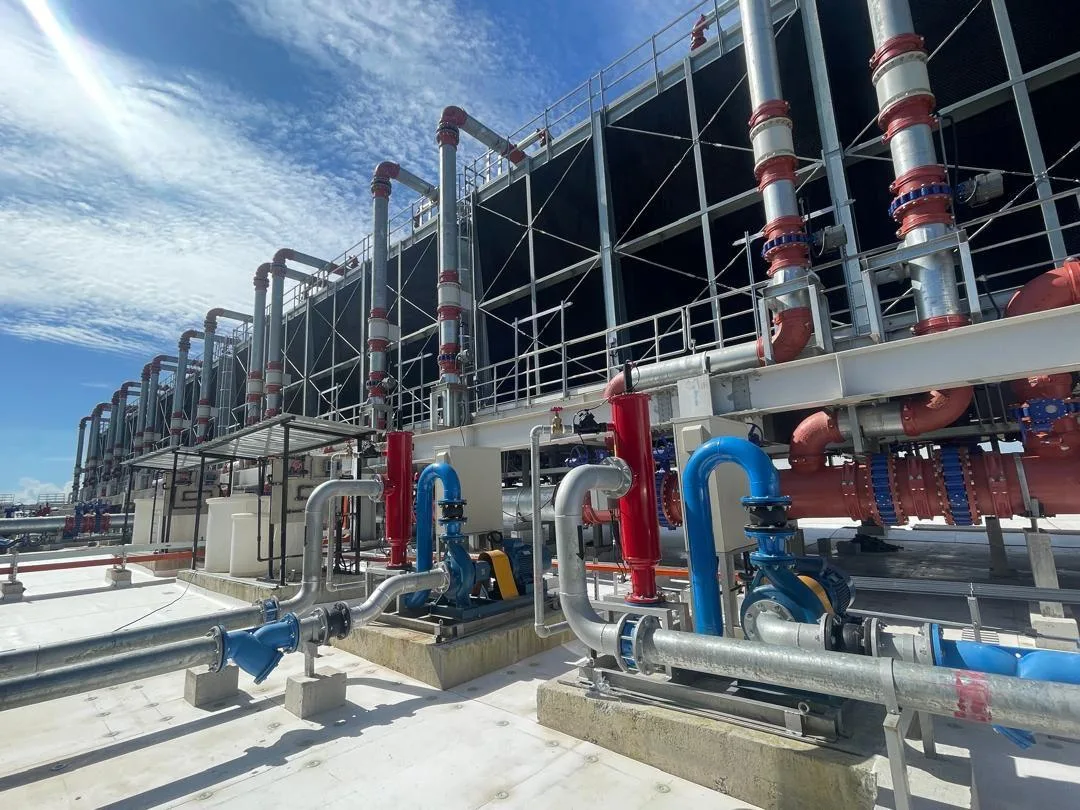
Hyperscale Data Center Advanced Cooling Water Filtration
Aytok supplied automatic self-cleaning filtration systems for the cooling water circuits of a hyperscale data center with a 128,000 m² facility footprint in Johor, Malaysia. The systems are designed to remove suspended solids from the cooling water and reduce the particle load reaching downstream equipment.
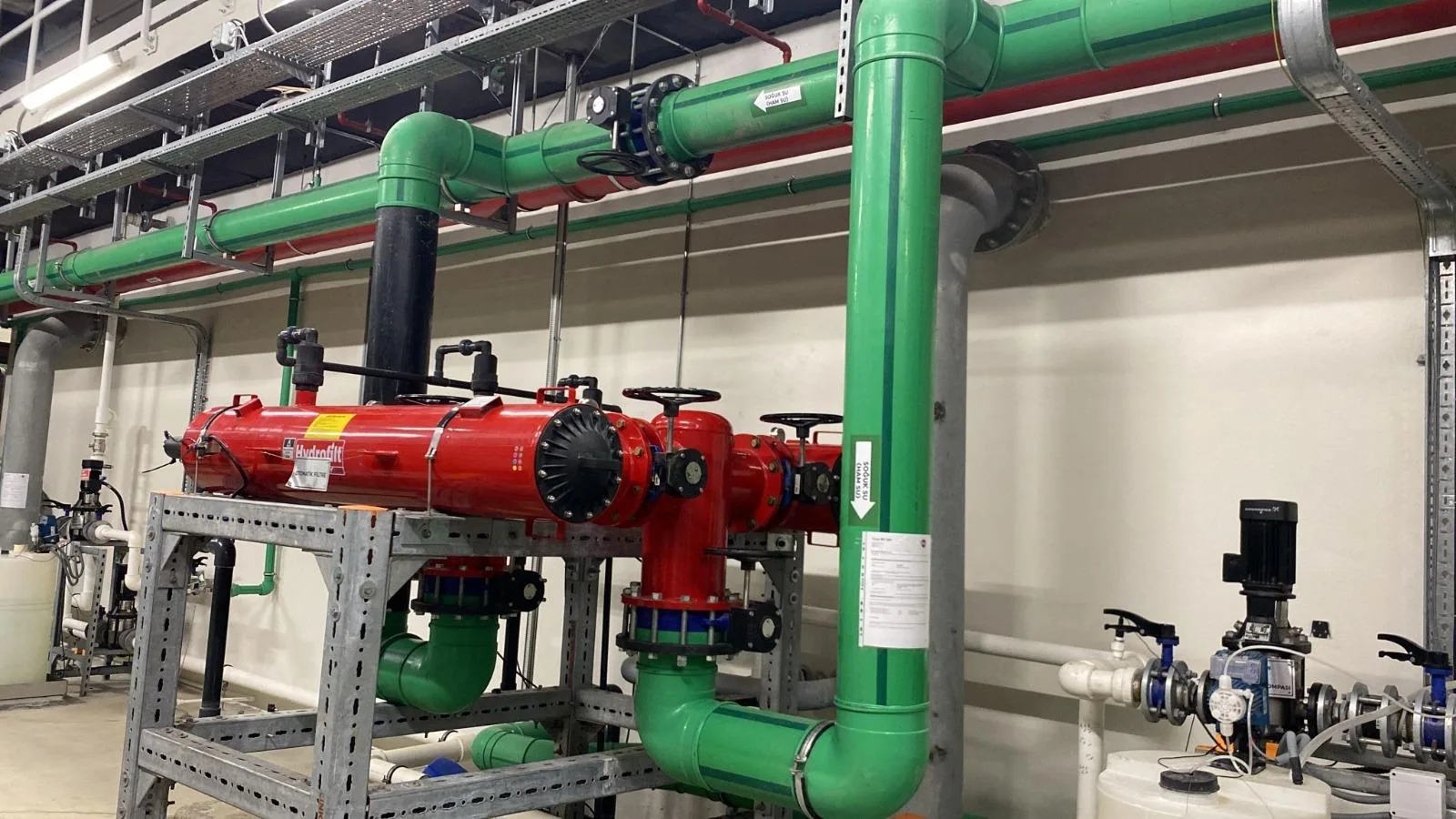
Cooling Water Filtration for an Aviation Facility
Aytok supplied an EF-128 automatic screen filtration system for the cooling water circuit of an aviation facility in Türkiye. Designed for a flow rate of 500 m³/h, the system helps reduce the suspended particle load reaching downstream cooling equipment. Its automatic cleaning function supports operation with less routine manual intervention.

Automatic Disc Filtration for Industrial Cooling Water
Aytok supplied an automatic disc filtration system for an industrial cooling water application in the United Arab Emirates, engineered for 50 µm filtration at 720 m³/h. The system is designed to manage suspended particles in the cooling water and protect downstream equipment from fouling.
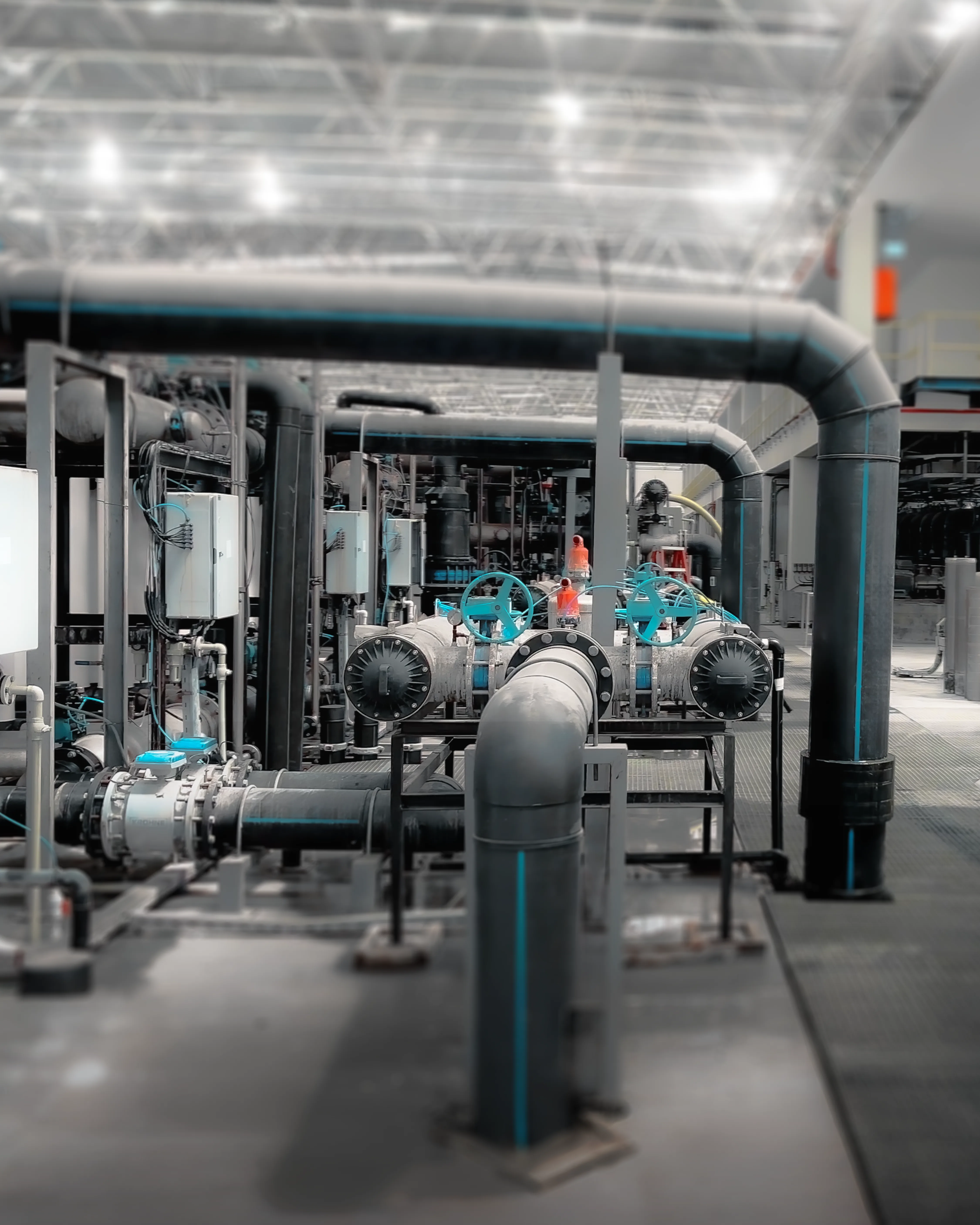
Membrane Pre-Filtration for a Paper Mill
Aytok supplied a filtration system for a paper mill in Türkiye, where process water passes through a membrane treatment stage downstream. The filtration system is used to reduce the suspended particle load entering the subsequent treatment process. The filtration duty was defined around the mill's process water conditions and the requirements of the downstream equipment.
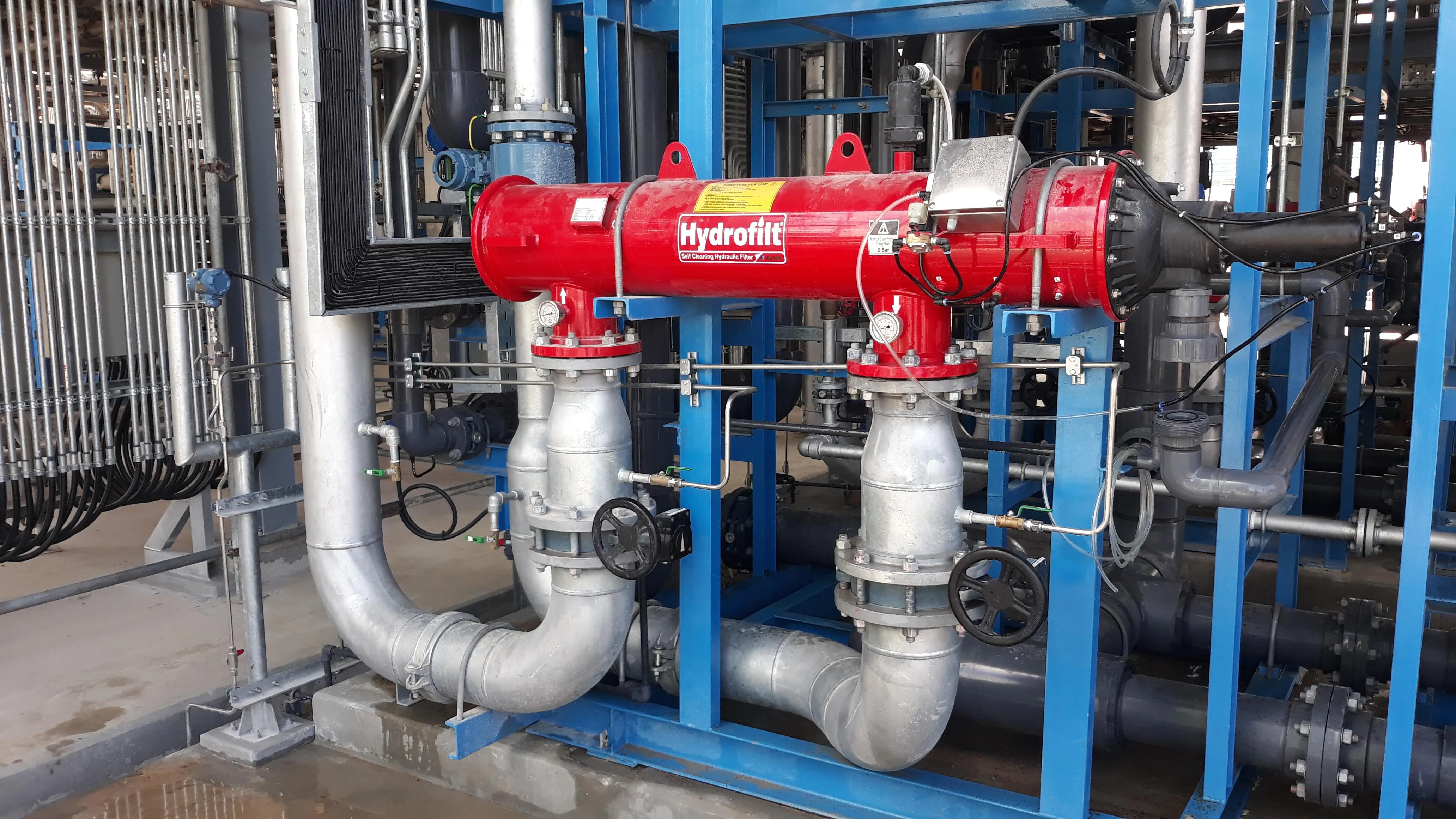
UF Pre-Filtration for Power Facilities in Thailand
Aytok supplied EF and VEF Series automatic screen filtration systems for multiple power facilities in Thailand. Installed ahead of ultrafiltration (UF) treatment, the systems help reduce suspended particles reaching the downstream UF stages. The projects demonstrate how the filtration duty and equipment configuration can be adapted to different facilities within the same sector.
What to share with our team
Send what you have; partial data is fine, and we can help identify what to measure next.
Common questions
What is side-stream filtration in a cooling tower?
Does filtration replace chemical treatment?
Which filter type is right for my system?
Can the same filters be used for process water?
What information is needed for a quotation?
Tell us about your system
Share what you know — water source, flow rate, contaminant type, filtration point and the equipment you need to protect. Partial information is fine; our team will ask any further technical questions needed to size your system.